Week 1 — The Royal Navy Patrol Service
Coastal defence, convoy guardianship, and the small ships that made giant rescues possible.
Please log in if you want to save your progress against your profile. Otherwise you can still play, but your results will not be logged.
Minesweeping was relentless and dangerous. Mines could detonate without warning, and keeping sea lanes open demanded calm drill, teamwork, and courage. Many RNPS sailors were former fishermen, already used to hard weather and long nights — skills that translated directly into wartime patrols and hazardous inshore work.
HMS Sparrow’s Nest in Lowestoft became the heart of the service, where crews trained before deploying. From there, they supported Operation Dynamo, threading through smoke and fire to bring troops off the beaches between 26 May and 4 June 1940. That rescue lifted more than 338,000 Allied troops from the sands and the Mole. Each successful sweep or escort meant more lives saved and another day of Allied shipping reaching its destination.
The markings painted on their bridges recorded confirmed hostile threats defeated — a quiet tally of lives protected and routes kept open. Today those “kill markings” are remembered as proof of disciplined seamanship and the teamwork that kept convoys moving.
News Feature — Lieut. Richard Been Stannard VC
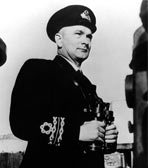
Lieut. Richard Been Stannard commanded the armed trawler HMS Arab during the Norwegian campaign. Under sustained air attack at Namsos in April 1940, he kept his ship alongside a burning jetty to fight the flames, then remained to rescue soldiers and sailors who would otherwise have been trapped. He later held off repeated dive-bombing runs, manoeuvring in the fjord to protect other ships while his crew shot down an attacker and saved damaged vessels.
For thirteen days of continuous action he showed calm judgement, tireless leadership, and an insistence on bringing others home first. His Victoria Cross was the only VC awarded to a Royal Naval Patrol Service member during the Second World War. Stannard’s story is a reminder that courage in small ships could change the fate of entire operations.
Discussion prompts
- How did Stannard balance ship safety with his determination to protect others?
- Which RNPS habits — signalling, firefighting, damage control — helped him hold the line?
- What modern coastal missions still rely on the skills the RNPS perfected?
Note: This video is a dramatisation, an AI recreation, and a historical interpretation, created for the Youth Programme for educational purposes.
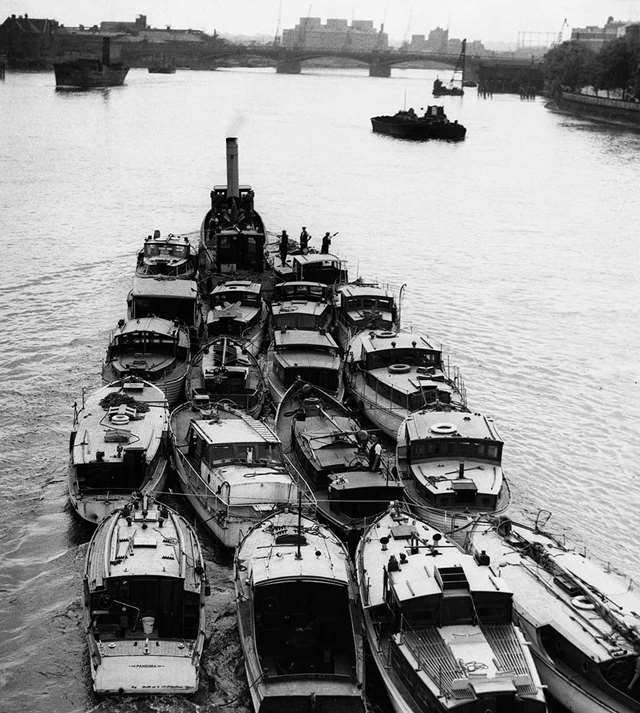
During the Second World War, Britain relied on more than big battleships. One of the most important groups was the Royal
Navy Patrol Service (RNPS). They operated around 6,000 small ships and boats, many taken from civilian life, including
fishing trawlers, drifters and yachts.
Their main role was to keep the seas safe. This included minesweeping, convoy escort, coastal patrols and supporting
major operations such as Dunkirk and D-Day. Minesweeping was especially dangerous, as mines could explode without
warning, and many sailors lost their lives doing this work.
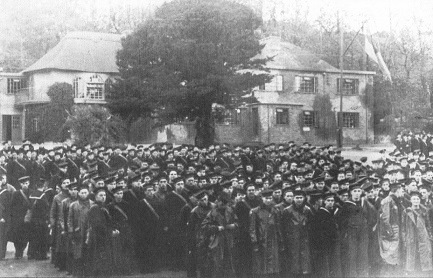
The RNPS was based at HMS Sparrow’s Nest in Lowestoft, the heart of the Patrol Service, where sailors trained before
going to sea.
Some crews were known as “Churchill’s Pirates” for their daring missions near enemy coasts. The service was also
nicknamed “Harry Tate’s Navy” because of its mixed fleet, but their courage earned great respect.
THIS MONTH’S FOCUS
Patrol craft readiness: clearing mines, marking safe channels, and coordinating with beach evacuation teams.
Operation Dynamo drill: how small crews embarked evacuees, kept station under air attack, and returned safely.
FROM THE DIRECTORSHIP
“Minesweeping was the RNPS at its hardest: patient crews towing sweeps through mined waters so others could pass safely. Their discipline, nerve, and precision turned lethal channels into working sea lanes.”
DofE Program map
Track the sequence of DofE Program activities. Weeks with published content link straight to their Chronicle page so you can jump in and log your progress.
| Week | Topic |
|---|---|
| 1 | Royal Navy Patrol Service – “Harry Tate’s Navy” |
| 2 | Operation Dynamo – Dunkirk lift |
| 3 | Communication and signals at sea |
| 4 | Parts of a ship – inside and outside |
Log in to view weeks 5–16.